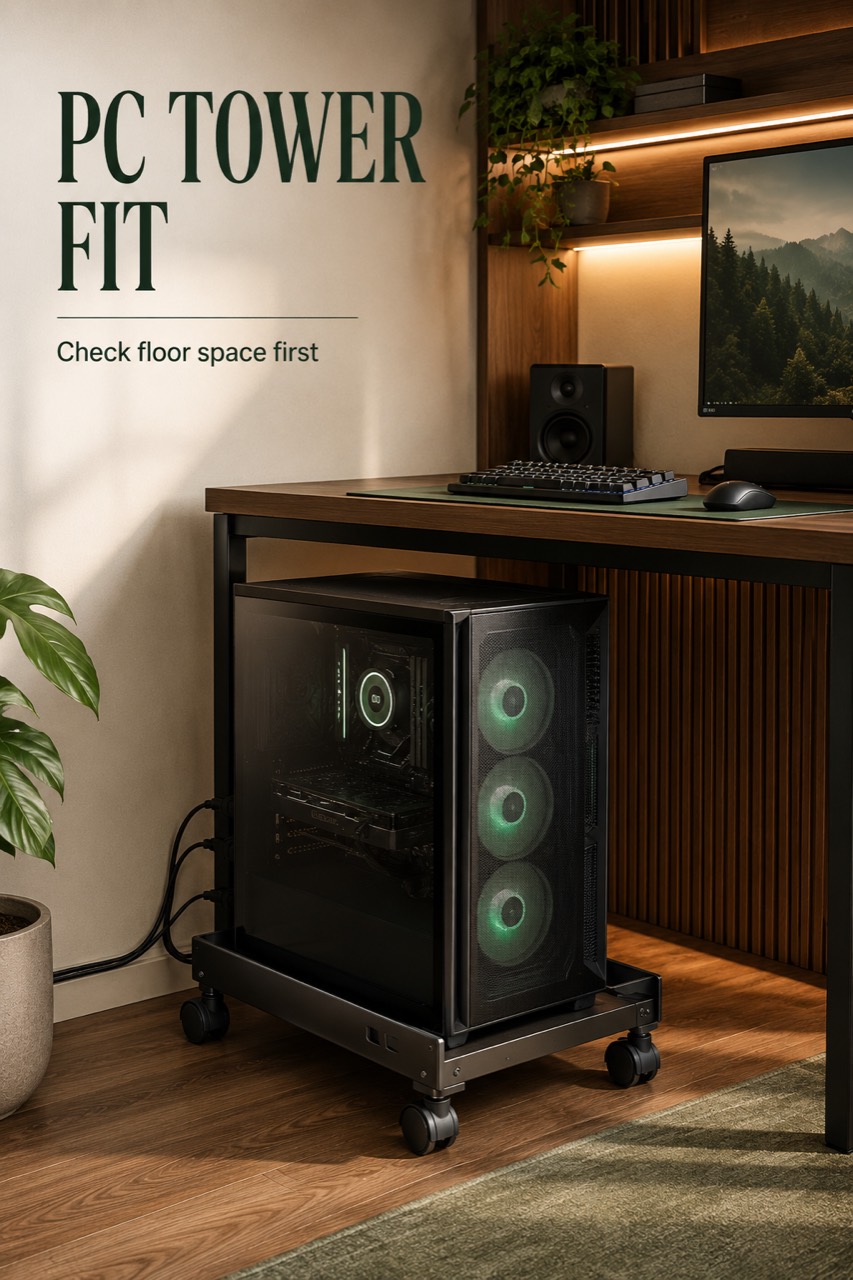
PC Tower Rolling Stand Fit Check (2026)
Quick answer: A PC tower rolling stand can be useful when the tower footprint fits the platform, the floor surface works with the casters, and the cables have enough slack for the movement you want. This fit-check guide helps you measure clearance, check dimensions, and verify compatibility before purchasing.
Last updated: June 24, 2026
Who This Guide Is For
This guide is for gamers, students, and small-desk setup owners who want to raise a desktop tower off the floor and make it easier to move beside a gaming desk or home-office workstation.
It is especially useful when the current setup makes cleaning, cable access, or desk rearrangement annoying.
Original Recommendation Logic
The recommendation starts with the tower setup constraint. A rolling stand only helps if the tower footprint fits, the floor surface allows normal movement, and the cables are not pulled tight when the tower shifts.
The product path should stay grounded in measurable checks: tower width, tower depth, platform space, caster clearance, cable slack, floor surface, and stability observation. Do not present the stand as universally compatible with every tower, desk, or room layout.
What You Need To Measure First
Before using an affiliate link, measure the real PC setup:
- Tower width and depth at the base.
- Any side-panel bulges, feet, or case shape that changes the footprint.
- Space beside or under the desk where the stand will sit.
- Cable slack for power, monitor, USB, Ethernet, audio, and peripherals.
- Floor surface, including rug edges, mats, or uneven transitions.
- Clearance around desk legs, shelves, and wall outlets.
These checks matter more than the visual idea of keeping a tower off the floor. A stand that does not fit the tower or cable path will not improve the setup.
PC Tower Rolling Stand Fit Check
Use this checklist before choosing the stand:
| Fit Check | Why It Matters | Pass Signal |
|---|---|---|
| Tower footprint | The tower must fit the usable platform, not just the outside footprint. | The case sits fully on the platform without overhang concerns. |
| Platform dimensions | Adjustable rails or edges can reduce usable space. | Usable width and depth match the tower base. |
| Cable slack | Moving the tower can strain short cables. | Cables remain relaxed in the intended stand position. |
| Floor surface | Casters behave differently on hard floors, mats, and rugs. | The stand can move in the intended area without snagging. |
| Stability observation | Stability depends on tower size, platform fit, and movement. | The tower feels steady in the observed setup without broad safety claims. |
Best for: Desk-Side Tower Access
Best for: desktop PC owners who want the tower raised off the floor and easier to move for cleaning, rear-port access, or small desk rearrangements.
This product job is strongest when the tower base fits the platform, the stand stays in a predictable desk-side zone, and cables have enough slack to avoid strain.
Who Should Skip
Who should skip: users with a tower wider or deeper than the usable platform, tight cable runs, thick rugs that block caster movement, or no desk-side clearance.
Also skip this route if the tower is frequently bumped, moved across uneven surfaces, or placed where cable strain would be difficult to see.
Product Path
The current approved affiliate path is:
View the PC tower rolling stand option
Use the link only after checking the fit criteria above. The project should not add claims about price, rating, review count, availability, safety, cooling, durability, load capacity, or universal compatibility unless those claims are verified through an approved source or owner evidence.
What To Photograph For Original Evidence
Create original visuals before scaling this page:
- Tower base measurement photo showing width and depth.
- Platform fit photo with tower edges visible.
- Cable slack photo behind the desk.
- Floor surface close-up where the casters will move.
- Before and after desk-side placement photo.
These images should be owner-generated or original graphics. Do not use Amazon listing images, packaging, logos, reviews, ratings, or brand marks.
Pros and Cons
What Works
- The buyer job is clear: raise the tower and make access easier.
- The pin and product path match the same desk setup use case.
- The checklist turns a broad setup accessory into a measurable fit decision.
What Needs Proof
- Usable platform dimensions.
- Tower footprint fit for common case sizes.
- Cable slack in the intended desk position.
- Caster behavior on the actual floor surface.
- Stability observations in a real setup.
FAQ
Is a PC tower rolling stand worth using?
It can be useful if your tower fits the platform and your cables have enough slack. It is most useful when you need easier cleaning, cable access, or desk-side movement.
What should I measure before buying a tower stand?
Measure the tower base width and depth, the space beside the desk, cable slack, and the floor surface where the stand will move.
Can a rolling stand work on carpet?
It depends on the floor surface, rug thickness, caster design, and tower weight. Use this as a fit check, not a universal claim.
Should this replace direct Amazon pin traffic?
Test it. The current direct Amazon path produced an outbound click, but this fit-check page can help buyers avoid poor fit before clicking through.
Bottom Line
The PC tower rolling stand path is worth keeping. The product job matches the pin promise and local product record. The next improvement is to add real measurements and original photos so the page becomes a stronger pre-Amazon decision point.
Next step: collect tower footprint, platform, cable slack, and floor-surface evidence, then run a compliance check before changing any public pin or destination.
--- SUPPLEMENTARY --- FAQ Questions: 1. Is a PC tower rolling stand worth using? -> It can be when the tower footprint, cables, and floor surface fit. 2. What should I measure before buying a tower stand? -> Measure tower width, depth, desk-side space, cable slack, and floor surface. 3. Can a rolling stand work on carpet? -> It depends on the observed setup and should not be claimed universally. 4. Should this replace direct Amazon pin traffic? -> Test direct Amazon against the fit-check page after QA.
Image Suggestions: 1. Tower footprint measurement photo - alt: "PC tower rolling stand footprint measurement" 2. Platform fit photo - alt: "desktop tower stand fit check" 3. Cable slack behind desk - alt: "PC tower cable slack check" 4. Floor surface close-up - alt: "tower stand caster floor surface check"
Products Featured: - PC tower rolling stand: https://www.amazon.com/dp/B083DMYKC9?tag=pickbetter01-20 (primary)